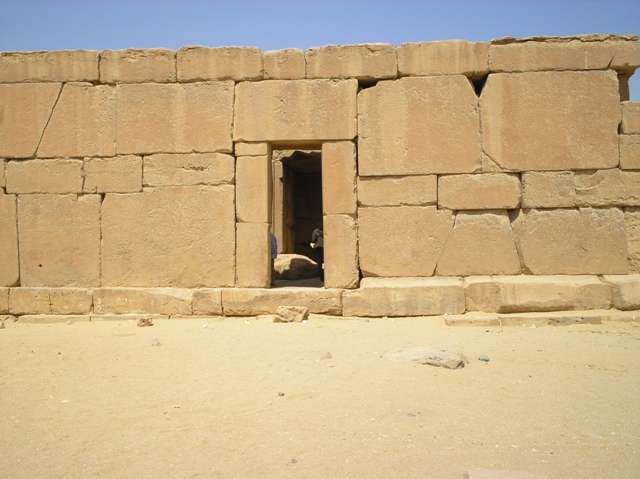
Thought to be dedicated to Sobek the Crocodile God and situated circa 3 miles North of Lake Qarun near Fayoum on a lower outcrop of Mount Qatrani, 180 feet plus above the shoreline that once came to its feet and is now over 3 miles distant. Lat.30.67304 Lon.29.59784
The Entrance
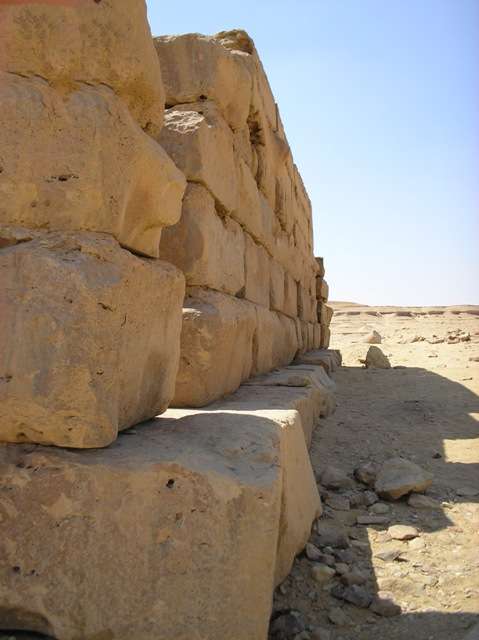
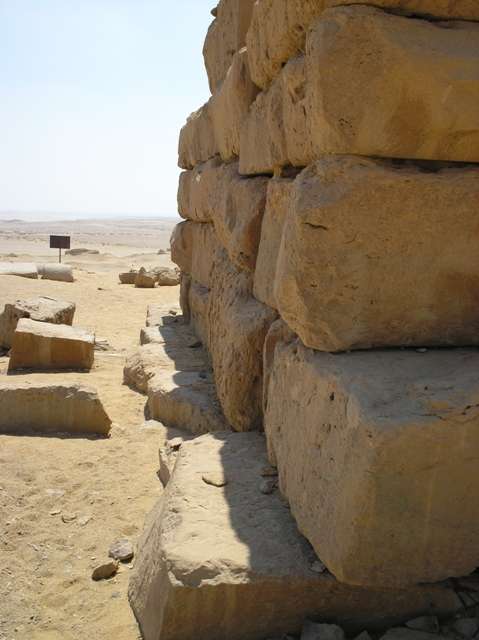
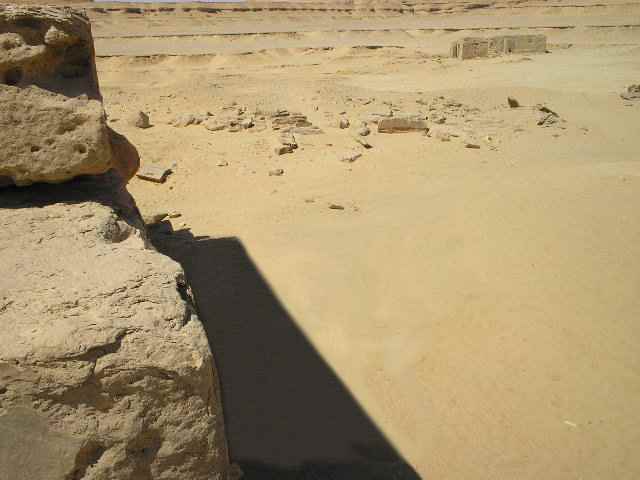
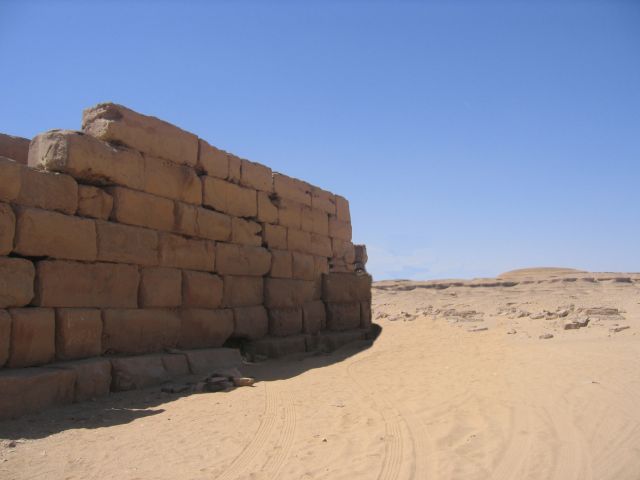
Rear Views
At one time the marshy shore lines of the Fayoum lakes must have been teeming with crocodiles. The crocodile God Sobek's Temples flourished around Al Fayoum. Some still remain. In fact the town Arsinoe was known to the Greeks as Crocodiliopolis. At some Temples, sacred crocodiles were tended with prime meat and became quite tame. Their carcases were mummified and buried in special animal cemetaries.
Sobek also came to symbolise the produce and fertility of the Nile and so his status became more ambiguous. The crocodile's ferocity, power and strength made it a perfect patron for the Army. Others regarded Sobek as a repairer of evil, rather than a power for good; and therfore more likely to go to the Duat to restore damage done to the dead.
He was also said to call upon other Gods and Godesses to protect people in particular situations, effectively having a more distant role nudging things along, rather than taking an active part. In this way he was seen more as a primal God, eventually becoming regarded as an avitar of the primal God Amun, who at the time was considerd the chief God. When his identity finally merged. Amun himself had become merged with Ra to become Amun-Ra; so Sobek, as an avitar of Amun-Ra was known as Sobek-Ra. Source: http://en.wikipedia.org/wiki/Sobek
We came rattling down the old army road as it is known by some. At breakneck speed for mile after mile we enjoyed our solitude and some comfort from the bucking sand dunes. Over to our right on the horizon we saw a few workers staring at our dust trail. They were at one of the old Basalt quarries, worked for thousands of years and the source of our fine roadway. Once upon a time our road was used to transport the Basalt to the villages that stood on the shore of the lake, before it was shipped to the other side and away to many destinations. Now the lake has shrunk by miles, the villages and buildings have been sucked into the desert sand again.
Beyond the road the sand also tried to suck us down.We encountered the familiar deceptive desert surface that looks like concrete, but yields by at least 2 inches to vehicle tyres. It led for a few more miles until at last the Qatrani mountain range grew before us. Our guide was good. He knew the route well and there was always method in his madness of driving and weaving like a snake to get the best purchase on the sand.
At last on harder ground we were following a rising dirt track and with some surprise, we levelled over the top of the Butte and were confronted with the sight you see in our lead picture.
This unfinished Temple is awesome for many reasons. It is huge; but not collossal. It is thought to be attributed to Sobek, but no one really knows for sure. The design is also unusual, formed from sometimes massive sandy limestone blocks, with a best date that ties with the time of the Basalt quarries during the Late Old/ Middle Kingdom 2125-1570 BC.
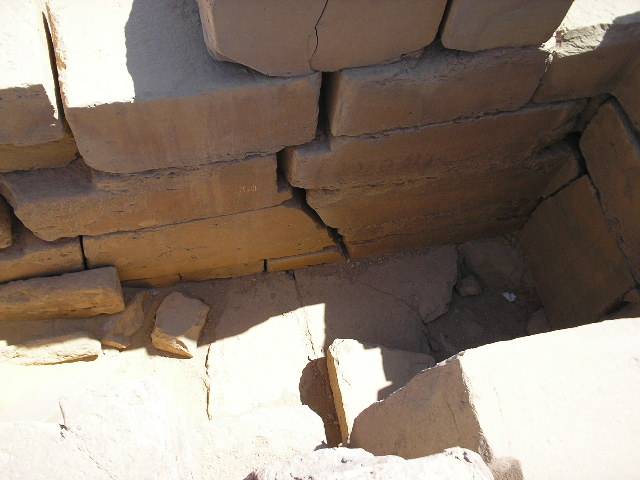
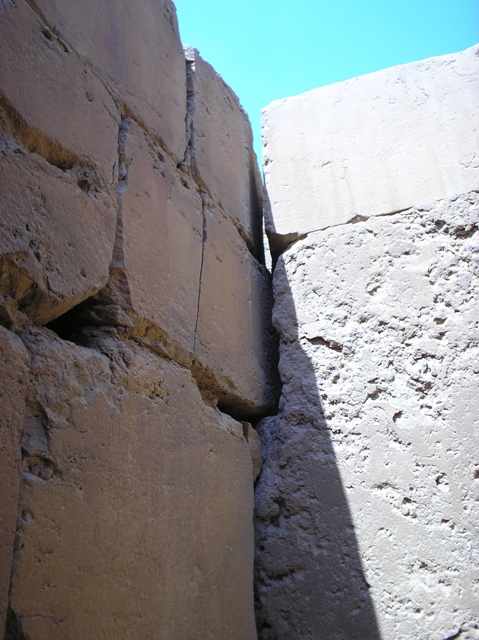
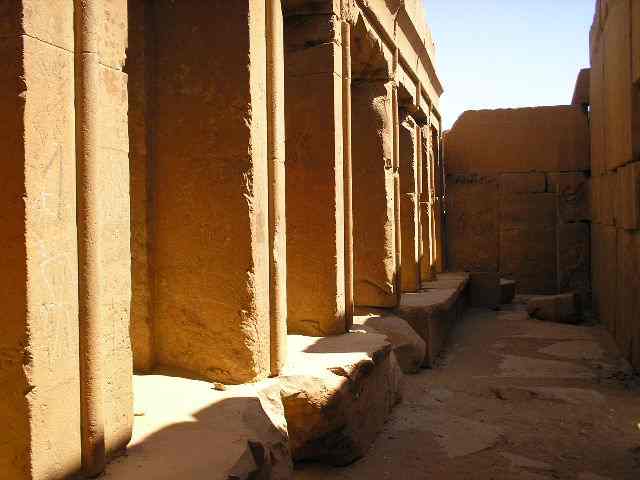
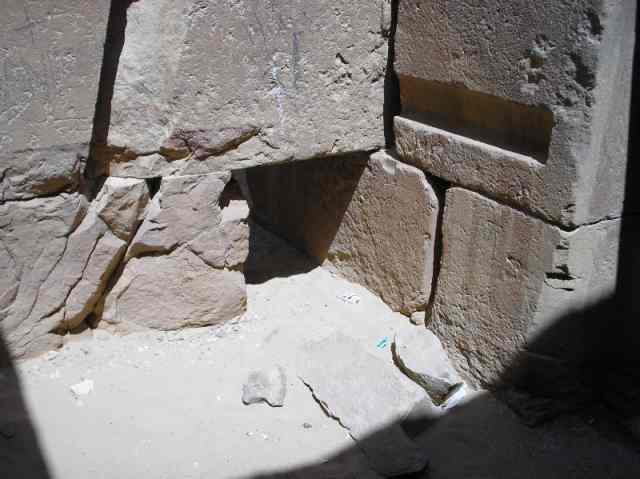
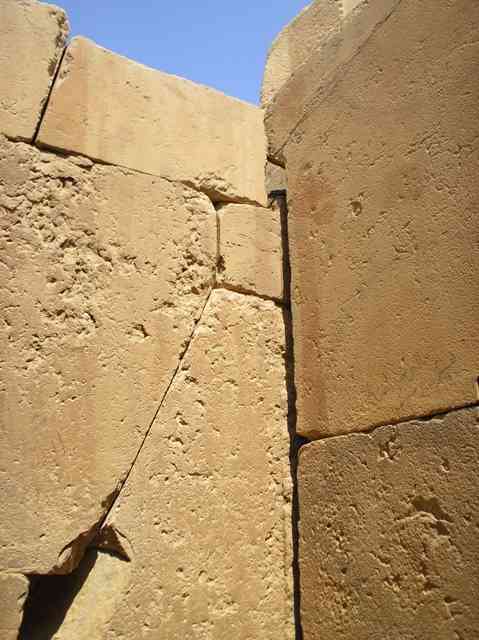
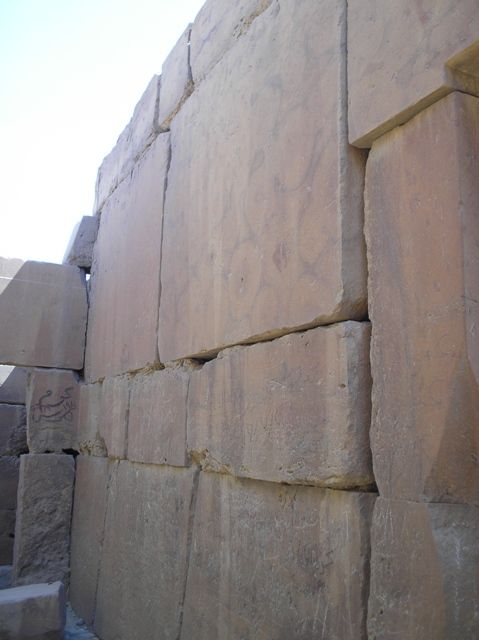
There are several compartments inside including a completely enclosed compartment. It is thought this was a mortuary Temple containing iconic Statues of Gods within its compartments. The construction is also unusual as you will see in the pics. It uses huge blocks intricately hewn with interlocking faces much the same as seen in Peru; with no mortar but able to withstand great structural disturbances such as earthquakes.
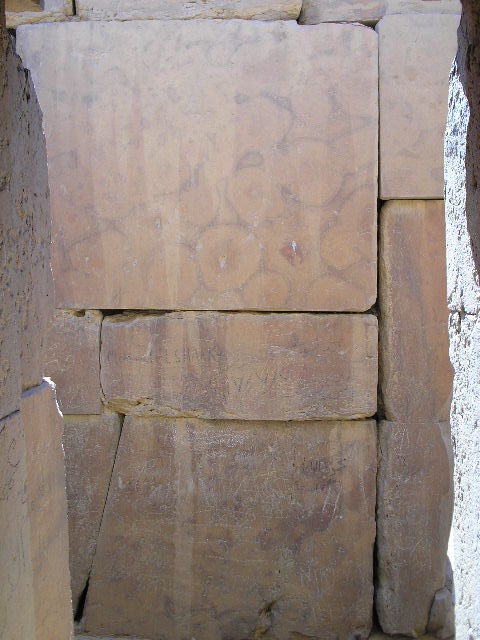
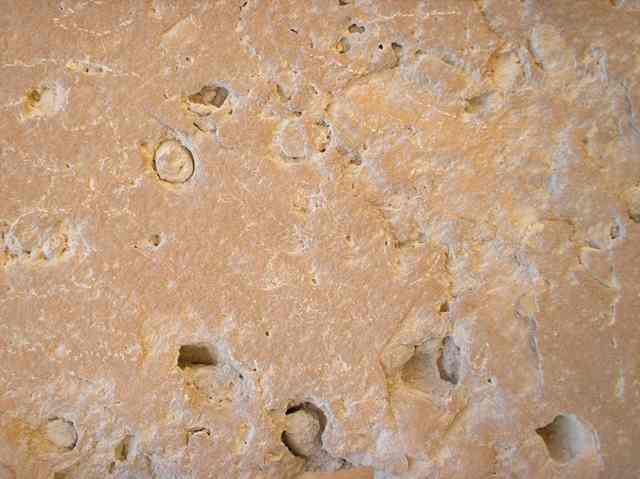
Especially note the Marbling on Blocks This is the strange enclosed compartment within the Temple
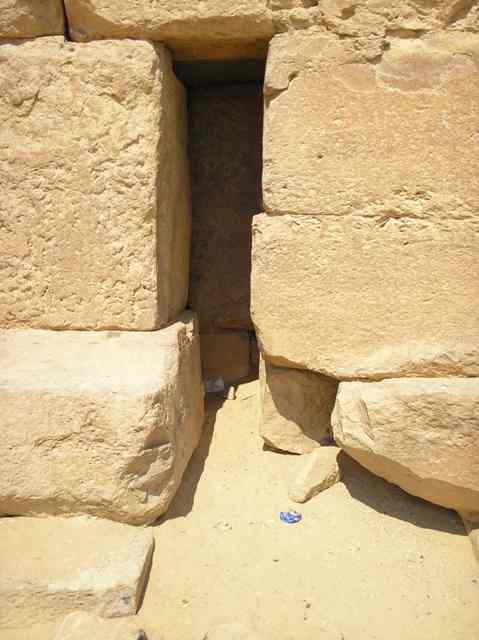
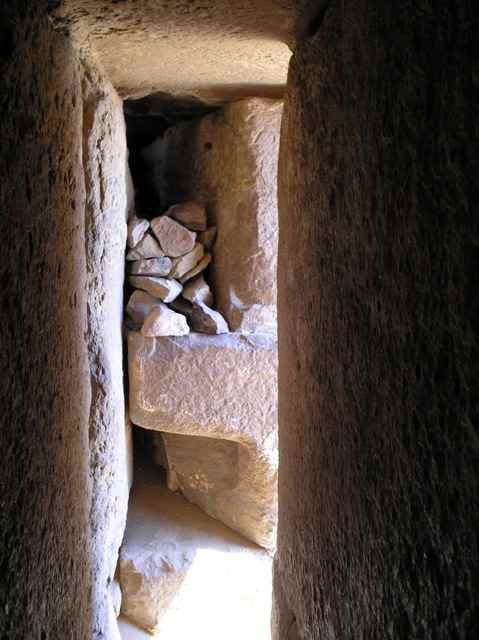
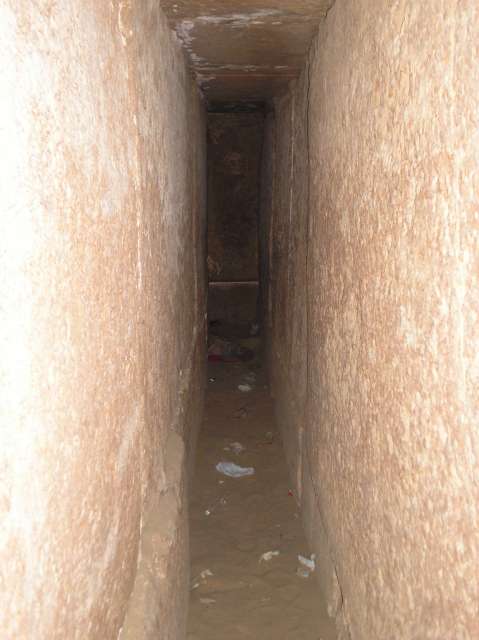
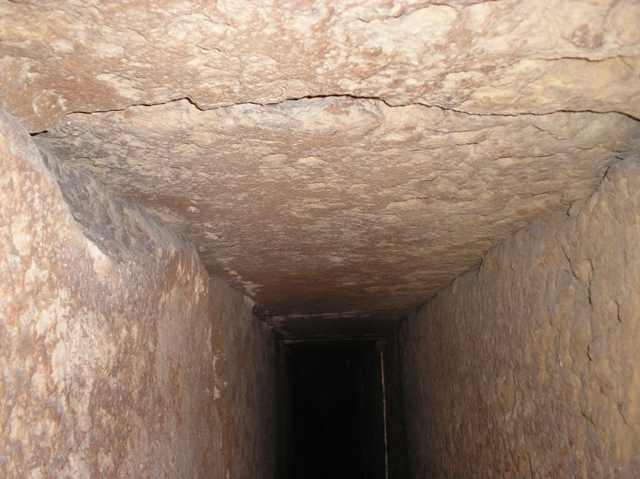
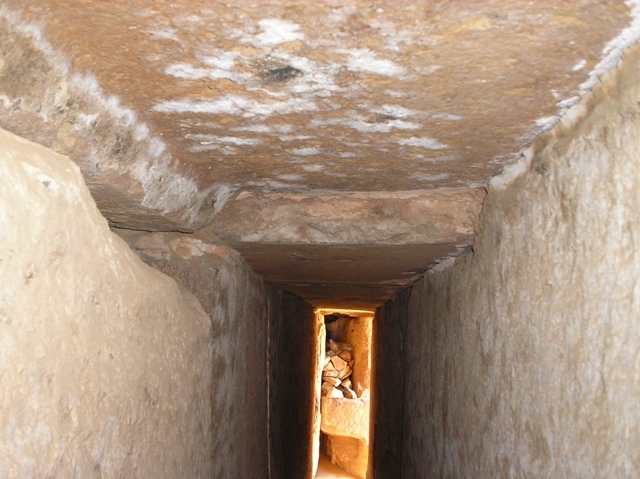
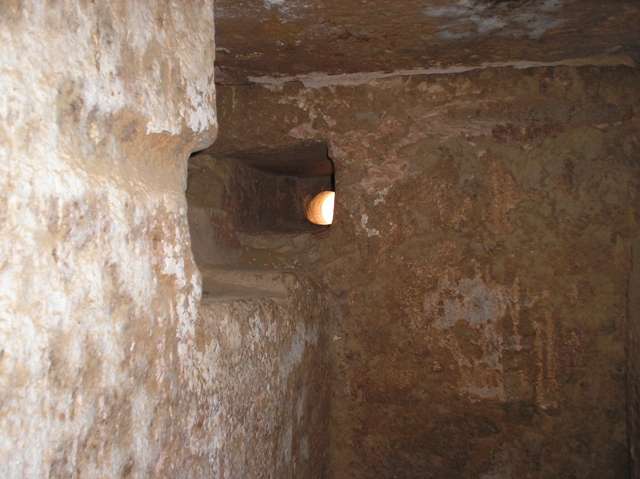
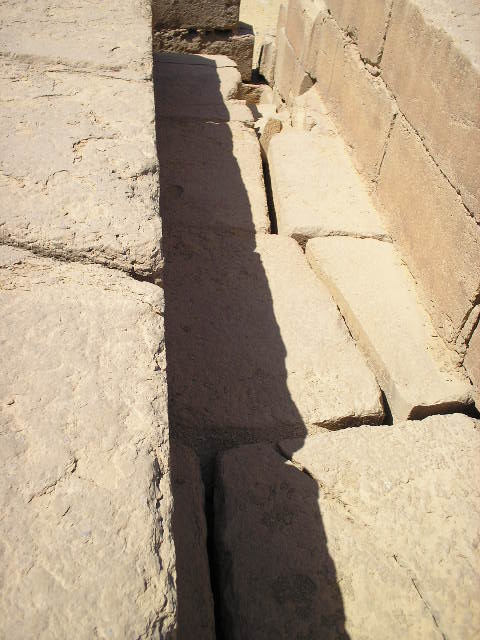
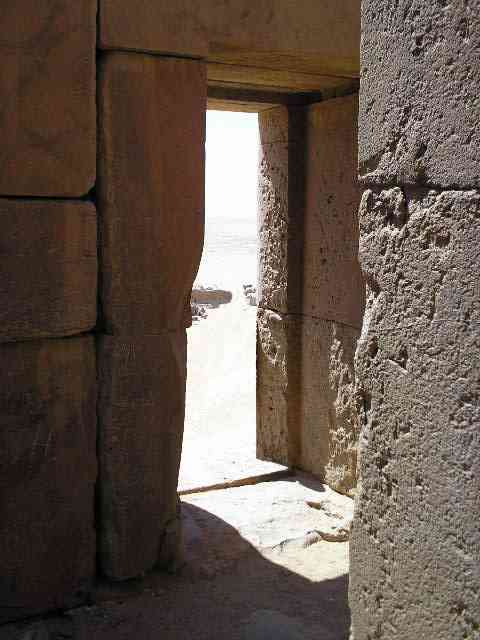
To the right of the entrance there is a smaller entrance leading into a corridor between the two skins of stone which made up the walls. Follow the pictures and you will see how we think this was connected with the main door arrangement at least. Apertures suggest the doors were meant to be braced strongly with restraints of some kind that would have been counterbalanced through into the substantial spaces between the wall skins.
The entrance to the corridor between the two wall skins at the Temple front
Corridor left of entrance by the main door entrance Corridor right of entrance with strange construction
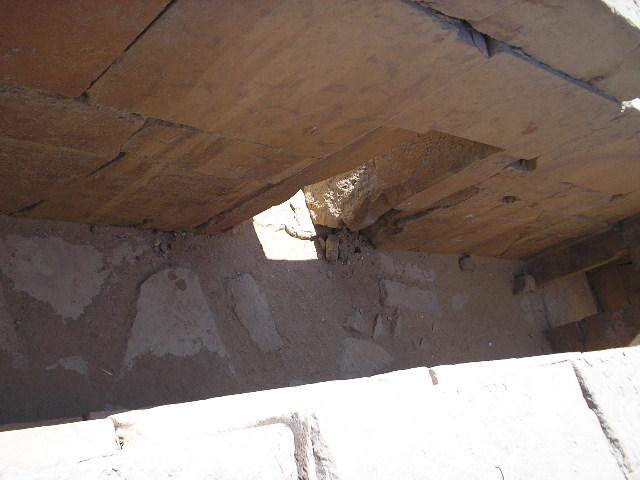
Massive stone lintels above the corridor ... and looking back to its entrance
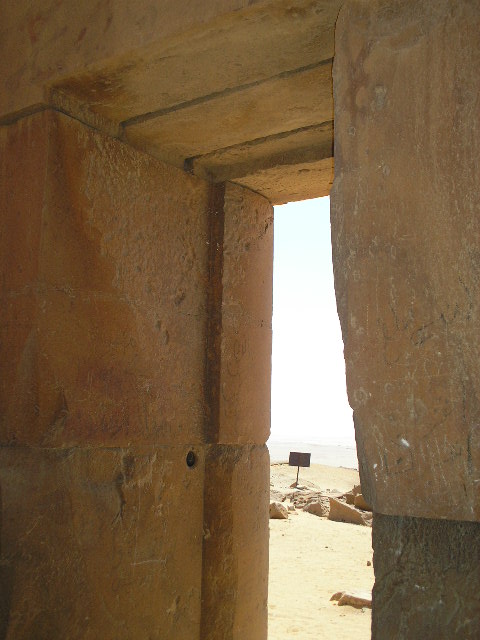
At the end of the corridor is the access portal to the Main Entrance. See how it was meant to receive eg. a brace. The second pic is taken from the doorway on the other side of the corridor. The hole at the centre of the doorway is the one showing in the left hand pic.
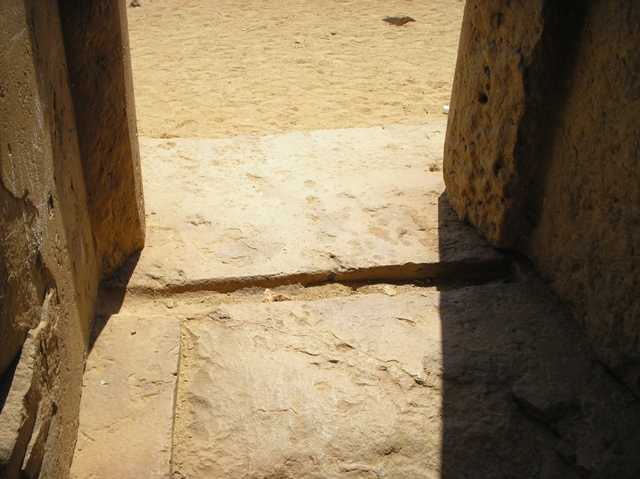
The doorway has a threshold rebate at the bottom.....and top pivot holes which were evident at other compartment entrances in the complex.
Roof Lintels above the Temple entrance An oblique view of entrance from inside
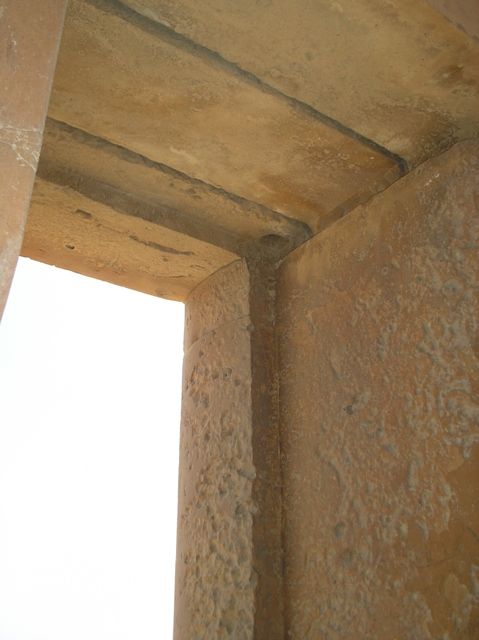
Internal corner detailDetails of one block surface
The lonely site clearly has not achieved the attention of more popular places such as the Valley of the Kings and Giza. This is a shame because as you may see from Google Earth, the whole area is filled with the evidence of substantial ancient occupation. In fact, if you study the area properly, you will gasp at what can still be seen outlined below the surface of the sands. And please don't forget that magic old water level of 200 feet plus towards the end of the last ice age. The striation of the ground from ancient inundation is so obvious!
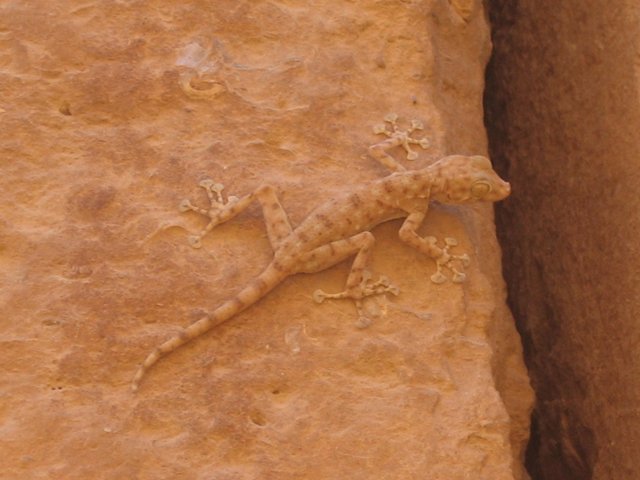
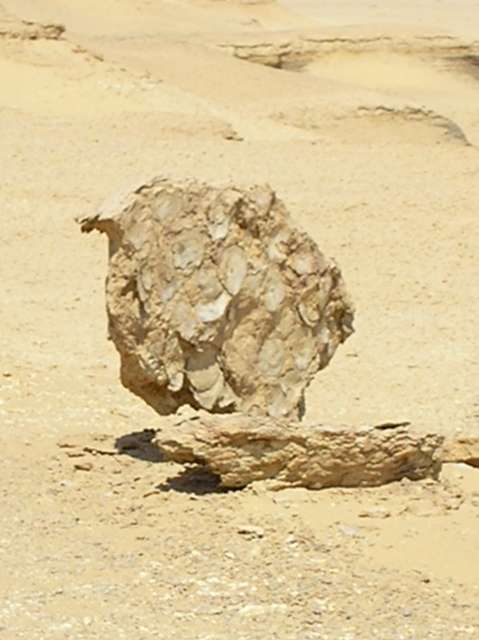
Perfectly camouflaged Resident Life Inside the Fort Ancient Oyster fossils outside the Fort
Only a few miles around the Qatrani Range is the site of Abu Lifa, featured on another of our pages. Many occasional finds have been made from the Quatrani area dating back thousands of years. There is undoubtedly much more to uncover.
Those who believe the Temple is a Roman epitaph, believe also that there must be a substantial undiscovered cemetary in the area. We know for sure the area sustained many Coptics, Romans, workers and their families and may have accommodated older ancestors tens of thousands of years previously.Indeed the main mountain rising fairly close by and behind the Temple has not been fully explored. The area is immense and any serious archeological survey work would be a substantial undertaking.
Looking to the valley behind the Fort Behind the Temple looking South
As with so many other sites, Qasr el-Sagha provides more questions than answers. Once again we ask your help! If you have visited the site yourself; or if you have the time and inclination to use our work for more research; if you can offer learned advice or simply new suggestions.. then please contact us. We will share anything new and give full accreditation. Here are just some of the questions:
Why was the building never completed.
Was it reoccupied from an even earlier time.
How did the builders prepare and manipulate such massive stones.
Where did they acquire such supreme skill.
Why such effort for a folly? Did it have another purpose
What was the real date of its origin.
What was the purpose of its idiosyncratic design features
How may it fit with other untested local ruins.
What is the real picture of life in the area at a known occupational time when water levels were receding from the end of the last ice age?
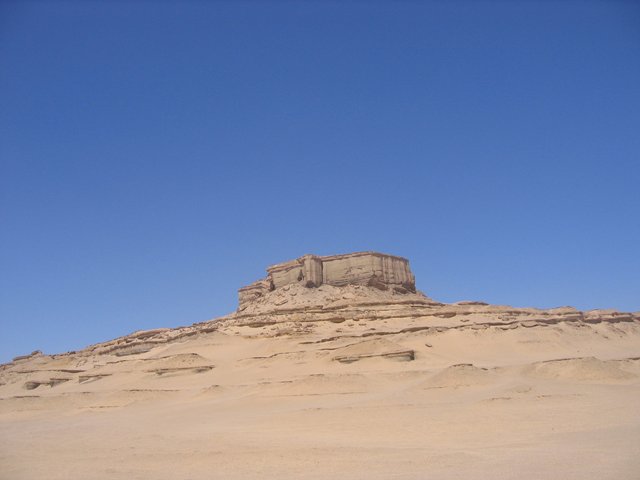
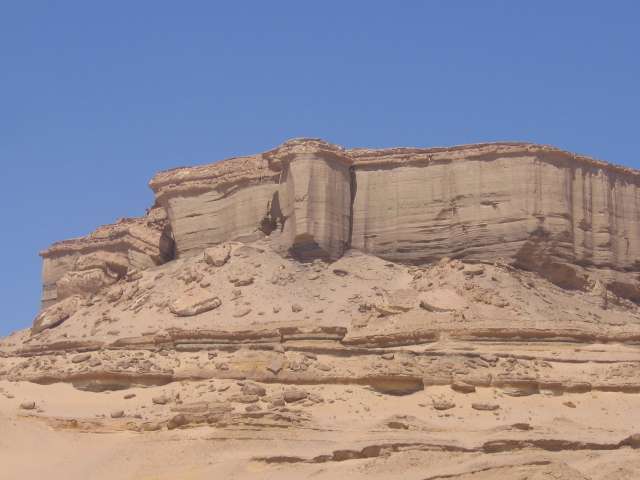
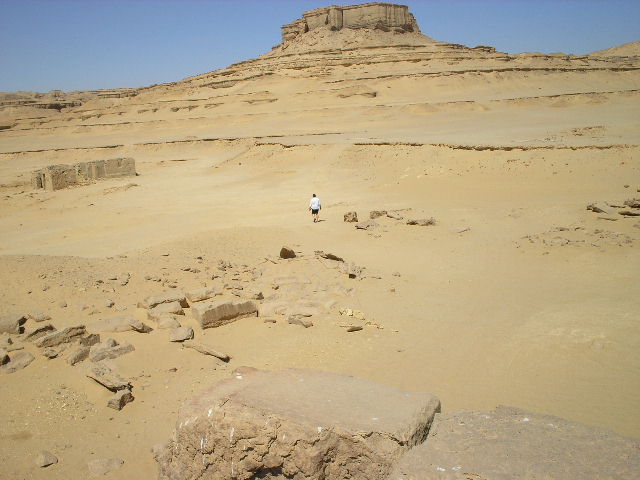
Backdrop to the Temple and little explored, the Mount Qatrani Range
Zoomed -in
The Icon Stations within the rear of the Fort/Palace. Pivot holes top and bottom of each alcove suggest doors originally
The only way to enter the strange enclosed compartment
Amazing corner construction detail
Internal walls (Marbling visible)
Another view of the main entrance
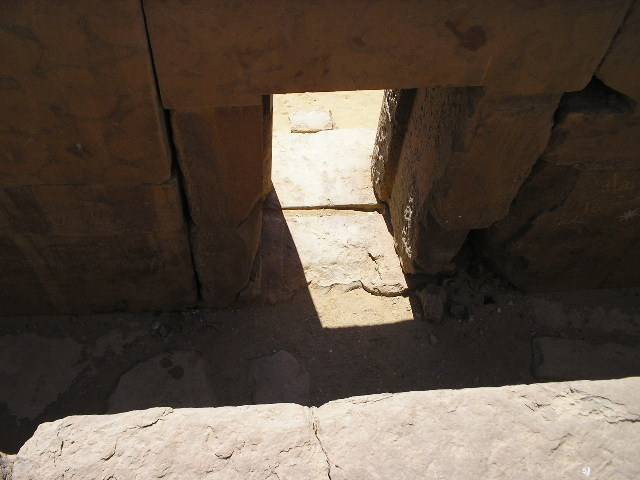
Directly looking down on entrance
Mount Qatrani rising behind the Temple (note other ruins)